

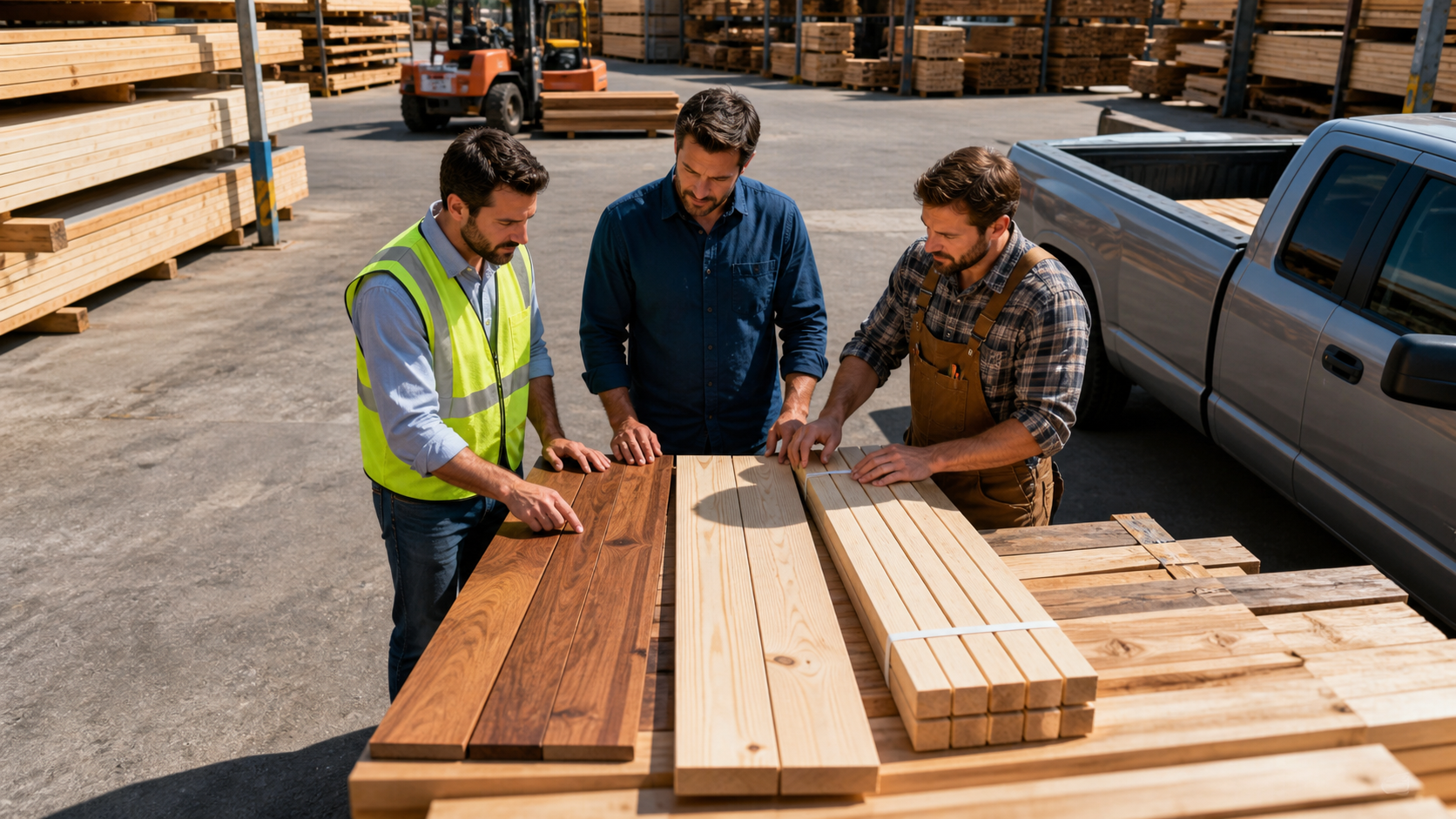
Cut Lead Times and Risk in Your Short-Run Builds
Short-run builds move fast. Engineering changes, rush timelines, and tight production windows leave very little room for bad material or missed deliveries. For shops serving automotive, aerospace, marine, defense, or heavy equipment programs, lumber is often the first thing needed and the first thing that can slow everything down.
How and where you source lumber affects budget, quality, and delivery dates. The wrong choice can lead to warped parts, rework on the shop floor, and missed deadlines. The right choice gives you stable material, predictable machining, and fewer surprises when schedules are already tight.
There are three main paths most teams use: a commercial lumber supplier, a local independent yard, and big-box home centers. Each has a place. The trick is knowing when to lean on which source so you cut waste instead of adding it. As a fifth-generation Michigan-based supplier, we see how these choices play out every day and how a better mix keeps short-run work moving.
Defining Short-Run Lumber Needs for Industrial Builds
When we say “short-run builds,” we are talking about all the one-off and low-volume projects that still demand high performance. These can include:
- Prototypes and pilot runs
- Fixtures, jigs, and gauges
- Foundry patterns and tooling
- Crates, skids, and blocking
- Limited production assemblies and mockups
Short runs do not look like high-volume production. You are dealing with smaller quantities, more design changes, and very little time to wait on backorders. You often need custom sizes, specialty species, or scaffold planks that are ready to go when the rest of the build is lined up.
A few things matter a lot more for these builds:
- Dimensional stability so parts stay true as humidity changes
- Species selection that matches the application, like hardwood for wear or softwood for weight and handling
- Grade consistency so you are not sorting through a pile to find the few boards that will actually work
Seasonal shifts add another layer. Late summer into fall, humidity starts to swing, and moisture content in lumber can move with it. If material is not stored and selected carefully, you can see cupping, twisting, and expansion show up right when you start cutting parts. Planning lumber sourcing ahead of fall and winter work helps keep weather from controlling your schedule.
When a Commercial Lumber Supplier Delivers More Value
A commercial lumber supplier is built around industrial needs. Instead of focusing on homeowner projects, this kind of operation centers on production, tooling, and specialty applications.
What sets a commercial lumber supplier apart:
- Industrial-scale inventory, including thicker, longer, and wider boards
- Access to specialty species and grades used in patterns, tooling, and scaffold planks
- Engineered and prototyping materials that support high-performance builds
- More consistent grading that helps you repeat results from one job to the next
For short-run builds, that often means:
- Tighter tolerances and better straightness, which save machining and fitting time
- Technical guidance on material selection, so you choose the right species and grade the first time
- Custom milling or cut-to-size options that reduce in-house prep work
- Traceability and documentation that are important in aerospace, defense, and other regulated sectors
This type of supplier can also support your production planning. Job-lot bundling, scheduled deliveries, and repeatable specs let you move from one prototype to a limited run without changing materials or dealing with sudden surprises. That continuity matters when your tooling, fixtures, or patterns need to match across multiple builds.
Local Lumber Yards and Big-Box Stores: Pros and Tradeoffs
Local independent yards and big-box stores still have a role in short-run work. They are often close by and easy to access, which helps when you are trying to solve a problem by the end of the day.
Where these sources can work well:
- Quick “gap-fill” pieces when you are short a few boards
- Simple crates, blocking, or non-critical supports
- Temporary fixtures or mockups where exact species and grade do not matter
- One-off jobs that do not need documentation or repeat performance
But there are tradeoffs to keep in mind:
- Stock may be inconsistent from visit to visit
- Specialty lumber, thicker dimensions, or longer scaffold planks can be hard to find
- Staff may be less familiar with industrial specs and tolerances
- Quality can vary enough to create rework, especially in precision setups
Seasonal demand adds pressure too. Fall project rushes can empty shelves fast, and restocking may focus on common construction sizes, not the thicker or longer pieces industrial shops need. Local yards may do their best but still struggle to bring in the exact material you want on short notice.
For safety-critical builds or where dimensional stability is key, these sources can end up costing more in labor and delays, even if the board price looks attractive on the surface.
Cost, Risk, and Quality: Choosing the Right Mix
To compare sourcing options, it helps to look beyond the sticker price on a board. The real cost of a short-run build includes:
- Waste from warped, checked, or off-grade material
- Rejected parts and remakes
- Extra machining time to straighten or clean up stock
- Lost hours when a crew is waiting on replacement material
- Schedule impact when downstream work has to pause
A commercial lumber supplier can often lower these hidden costs. More consistent quality, proper drying and storage, and reliable documentation cut down on surprises. In sectors like aerospace, marine, defense, or automotive tooling, that predictability reduces risk, both in performance and in compliance.
A hybrid approach often makes the most sense:
- Use a commercial lumber supplier for structural, spec-driven, or safety-critical components
- Use local yards or big-box sources for quick fill-in pieces, non-critical blocking, or temporary items
When manufacturers treat a commercial lumber supplier as a long-term partner, not just an occasional vendor, it becomes easier to support both short-run and ongoing production needs. Standardized specs, repeatable grades, and known lead times let teams focus on building instead of chasing material.
Put a Sourcing Strategy Behind Your Next Short-Run Build
Short-run work will probably never feel slow or relaxed, but it can feel more controlled. Planning lumber sourcing before peak fall and winter production cycles helps keep lead times stable and cuts the last-minute scramble that eats up shop capacity.
One useful step is to review a few recent short-run projects and ask:
- Where did material delays show up?
- Which sources led to the most sorting, rejects, or rework?
- Where did quality or moisture issues cause headaches in machining or assembly?
Patterns usually appear quickly. That makes it easier to decide which parts of your builds should be standard with a commercial partner and which can be covered by local or big-box options when needed.
McCausey Specialty Products has seen these challenges across automotive, aerospace, marine, defense, and heavy equipment projects, especially here in Michigan where weather and humidity move fast. By sharing clear project requirements, like sector, quantities, tolerances, and timing, teams can get material recommendations that match both the build and the schedule.
Frequently Asked Questions About Sourcing Lumber for Short-Run Builds
Commercial Lumber Supplier Vs. Regular Lumber Yard: Differences
A commercial lumber supplier is set up for industrial and commercial work, with larger and more specialized inventories, tighter grading expectations, technical support, and services like custom milling and scheduled deliveries. Regular lumber yards usually focus on residential and light commercial projects and carry fewer specialty species, sizes, and industrial documentation options.
When Should I Avoid Using Big-Box Lumber for Short-Run Builds?
You should avoid big-box lumber when your project has tight tolerances, safety-critical loads, or sector standards such as aerospace, defense, or heavy equipment tooling. In those situations, variable grade, moisture content, and species consistency can lead to rework, schedule slips, and higher risk.
Can a Commercial Lumber Supplier Help with Very Small Quantities?
Yes, many commercial suppliers work with small-batch and prototype orders, especially when they support ongoing industrial relationships. They can often bundle small lots efficiently and help you choose materials that will scale from prototype to limited production without changing sources.
How Far in Advance Should I Secure Lumber for Fall and Winter Builds?
For industrial short runs, it is smart to start conversations 4 to 8 weeks before you need material, especially for specialty species, pattern lumber, scaffold planks, or custom milling. That timing helps avoid seasonal demand spikes, freight delays, and moisture issues as temperatures and humidity change.
What Information to Share With a Supplier for an Accurate Quote?
Share details like end use, sector, preferred species, dimensions and tolerances, grade requirements, quantities, timing, and any certification or documentation needs. The more complete your information, the easier it is for a commercial lumber supplier to suggest options that balance cost, quality, and availability for your short-run build.
Get Started With Your Project Today
If you are ready to move your project forward with consistent quality and dependable timelines, we are here to help. Explore how McCausey Specialty Products can support your next build by choosing us as your trusted commercial lumber supplier. Our team is available to review your specifications, suggest suitable materials, and coordinate the details so you can stay on schedule. Reach out today so we can help you line up the right products for your upcoming work.
